






Looking for compact warmth without the hassle of wood or gas? A small electric fireplace might be exactly what you need. These units are great. They're energy-efficient, renter-friendly, and surprisingly powerful, perfect for small spaces.
Buying the best fireplace for your space is all about understanding each one's benefits, drawbacks, and how those fit into your home living goals. It’s also about knowing which brands and models really stand out.
And no, I'm definitely not talking about those sad little plug-in heaters that glow orange and smell vaguely like burnt toast. I’m talking real-deal, built-in, room-transforming electric units that look amazing and keep you from shivering through your Netflix binges.
We at Starfire Direct can help you get that luxury lodge feel, but because every home's electrical setup is different, we strongly recommend having a certified professional evaluate your space before installing. That expert check is essential to avoid costly surprises and ensure you're following all local safety codes.

Small Electric Fireplace Overview
Built-in electric fireplaces beat portable heaters any day. Especially the newer Remii models, which are sleek, efficient, and make your space look expensive.
Electric beats gas for tight spaces. You don’t need a flue, you usually don’t need a permit, and your air quality stays clean.
Not all “small” models are the same. Some run hot and loud, some just… glow. The good ones balance looks, heat, and ease of use.
Aesthetic matters. You’ll be staring at this thing all winter. Might as well love how it looks, crackling flame effects and all.
Install it right the first time. Trust me, cutting drywall twice because you didn’t read the clearance specs is no fun. Measure everything. Then measure again. And hey, if cutting into walls and dealing with wiring feels a bit daunting, having a certified electrician or installer double-check your plan can save you a lot of frustration and patch jobs.

So… Why Go Electric in the First Place?
Here’s what pushed me over the edge. One cold morning, I tried to light a gas unit my landlord installed in the corner. It sputtered and flared, then died. I tried again. Smelled gas. Panicked. I opened a window in 40°F weather, realized this was no way to start the day, and that night I ordered my first electric unit. I didn’t want to bother with all the needs and hassles of gas or wood.
Electric fireplaces are cleaner. No emissions, no gas leaks, no soot on the wall. I mean, I love the smell of a real wood fire, but I don’t love hauling logs through a hallway or vacuuming up ash from under my TV. Plus, electricity is already wired into your place. There’s no need to reroute plumbing or punch a hole through the roof. This convenience is pure gold when you’re trying to heat up on the cheap.
And honestly, “clean” is an understatement. Wood smoke is packed with fine particulate matter (PM2.5) that can wreck your indoor air quality and trigger asthma. And those popular ventless gas fireplaces? They can be problematic. They vent all their combustion byproducts, including small amounts of carbon monoxide and nitrous dioxide, directly into your room. A weird side effect is that they also pump out a ton of water vapor, which can raise your indoor humidity and potentially create a perfect environment for mold.
Electric units? Zero emissions. They are 99-100% efficient because no energy is lost up a chimney, and they don’t produce any CO, VOCs, or mold-causing moisture.
If you're still interested in exploring which gas fireplace might be right for you, give that article a read-through. Then, if you're still convinced that electric is best for your space, then just continue reading here!

What to Look for in a Small Electric Fireplace
If you’re just getting into this, here are a few things I wish someone had told me:
- Heat output: Look for 4,000–5,000 BTUs if you’re heating up a small space like a bedroom or den. Anything lower is mostly just for looks. This is enough supplemental heat for a 400-500 sq. ft. room.
- Dimensions: I was working with a designer on a Brownstone renovation in Brooklyn, and they had zero wall depth to work with. They thought a fireplace was a lost cause until I showed them the Remii Extra Slim, which is only 4 inches deep. It fits perfectly into standard 2x4 framing, and they were mad relieved they didn’t have to build out a whole new wall.
- Flame realism: Some models look cartoonish. Others? I’ve had guests ask if they were real. Multi-color LED flame sets with variable speed and brightness settings go a long way.
- Wall vs. recessed: Recessed looks cleaner and more permanent, but needs proper installation. For a recessed model, that means precise framing and wiring, which can be tricky. If that sounds overwhelming, consider having a certified installer or electrician help out. It’s a great way to avoid mistakes and a pile of drywall patches.
- Remote control or app: Trust me, you’ll want to change the heat without getting up. Especially if you’re curled up under a blanket.
And here’s a quick pro-tip: If you’re ever looking for rebates on home heating equipment, the FTC’s appliance buying guide is a stellar resource for checking out energy efficiency and finding local deals.

Comparing the Types of Small Electric Fireplaces
| Type | Ideal For | Heat Output | Installation | Pros | Cons |
|---|---|---|---|---|---|
| Freestanding | Apartments, rentals | 4,000–5,200 BTU | Plug-and-play | Easy setup, portable | Bulky, not built-in aesthetic |
| Wall-Mounted | Condos, small homes | 3,500–5,000 BTU | Moderate | Stylish, great for eye-level heat | May protrude from the wall |
| Built-In | Permanent reno projects | 4,000–5,000 BTU | Expert | Clean, high-end finish | Needs wall cutout or framing |
| Insert | Existing fireplaces | 4,000–4,600 BTU | Expert | Great for fireplace conversions | Must have existing cavity |
If you’re looking at a built-in or recessed fireplace, remember it will need to be cut into your wall or framed in. If that sounds tricky, don’t hesitate to hire a certified professional. Having an electrician or installer double-check your plans can really pay off, making sure everything’s safe, sound, and meets all local safety codes and ordinances from the start.
Top (Small) Electric Fireplace Models To Consider
We’re big fans of the Remii models, which are actually a line from the well-known brand Amantii. They’ve really nailed the balance of style, heat, and “small-space” solutions.+
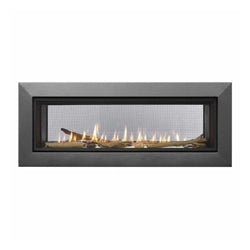
 The Remii Extra Slim Indoor/Outdoor Built-In is a sleek and modern.
Remii Extra Slim Indoor/Outdoor Built-In
- Size: As slim as 4 inches deep, available in small widths like 35" and 45".
- Heat: Up to 5,000 BTU.
- Why You’ll Like It: This is the ultimate problem-solver. That 4-inch depth means it tucks neatly into shallow walls, perfect for standard 2x4 construction or tight patio builds. The flame effect (called “Fire & Ice”) uses multi-colored LED strips, so you can change the vibe from warm orange to a cool modern blue.

Remii Deep Indoor/Outdoor Built-In
- Depth: A substantial ~12 inches.
- Heat: Up to 5,000 BTU.
- Why You’ll Like It: You might think “Why would I want deeper?” This one’s a visual showstopper. That 12-inch cavity means it can accommodate bigger, more realistic log media. It doesn’t look “pasted on”; it looks like a genuine, deep fireplace cavity. I used this in a sunroom and it completely changed the vibe.

Remii Tall Indoor/Outdoor Built-In
- Dimensions: A taller ~18-inch high viewing area.
- Heat: Up to 5,000 BTU.
- Why You’ll Like It: This one’s for the design-forward folks. Most linear fireplaces are short and wide, like a letterbox. The vertical flame presentation gives it that high-end hotel lounge feel, perfect for accent walls.

- Location: Indoor only.
- Why You’ll Like It: Same 4-inch slim benefits as the indoor/outdoor version but built for interior use. No venting, no fumes, just plug and play (with a few big safety rules… see below).
Installation Tips From Someone Who’s Messed It Up
Alright, let’s talk about the “gotchas.” These are the things that will frustrate you if you don’t plan for them.
Fireplace installation costs vary dramatically from a few hundred dollars for plug-in electric units to thousands for gas or wood-burning systems that require venting, permits, and professional installation.
- Consult a pro: If this feels overwhelming, having a certified electrician or installer review your plans can save you a lot of hassle.
- Check your studs. I once assumed there’d be space behind my drywall. There wasn’t.
- Clearances matter. Especially with TVs. You generally need at least 8-12 inches of vertical space between the fireplace’s heat vent and the bottom of your TV. Always read the manufacturer’s manual for this.
- Power supply: The Dedicated Circuit. This is the big one. Most of these units run at 1,500 watts. That’s almost the entire capacity of a standard 15-amp home circuit. If you plug it into the same circuit as your vacuum cleaner and turn them both on? Click. You’ll be walking to the breaker box. I had to upgrade one breaker after tripping it twice with the microwave on. Having an electrician run a dedicated circuit is highly recommended for performance and to avoid a major annoyance.
- Power supply: NO SURGE PROTECTORS. I’m begging you. Never, ever plug a heater into a power strip or surge protector. These units pull a constant high wattage that can, and probably will, overheat the strip and create a massive fire hazard. Directly into the wall. Only.
- Outdoor setups: If you’re using an indoor/outdoor model on a patio, it must be in a covered area and it must be plugged into a GFCI (Ground Fault Circuit Interrupter) outlet. That’s the one with the “test” and “reset” buttons. It’s a lifesaver that cuts the power if it detects moisture, preventing electric shock.
Built-in or recessed installs can be tricky. A certified installer can verify that your wiring, framing, and clearances all check out, so you don’t end up redoing work later.
Customer Reviews & What People Actually Say
I had a customer in Boston who was wicked skeptical, calling it ‘just a glorified space heater’. I told him, ‘That’s exactly why it’s so smart!’ He started using his Remii to heat just his living room while turning his main thermostat way down, and he messaged me a month later saying his utility bill was finally manageable.
It’s a supplemental zone heater. Here’s the strategy: You turn your main house thermostat down. Then, you use the fireplace to heat only the room you’re actually in. Why pay to heat empty bedrooms? This “zone heating” strategy is where you see real savings on your utility bills.
And about that bill? A 1,500W heater costs, on average, only about $0.18 to $0.30 per hour to run. If you run it with just the flames on (no heat), it uses almost no electricity at all- we’re talking pennies.
Frequently Asked Questions for Small Electric Fireplaces
Yes. They deliver clean, zero‑emission supplemental heat with realistic flames and no venting or permits in most cases—ideal for rentals and tight spaces. Starfire Direct helps you choose a model that looks high‑end and installs cleanly.
Target 4,000–5,000 BTU to comfortably supplement a 400–500 sq. ft. room (bedroom, den, office). Lower outputs are mostly for ambiance.
Yes—Remii Extra Slim is roughly 4″ deep, designed for 2×4 framing and tight retrofits where wall depth is limited.
Remii Extra Slim (shallow walls), Remii Tall (designer vertical viewing area), and Remii Deep (most realistic media). Each offers up to 5,000 BTU and refined flame effects.
Most units draw up to 1,500W on high—use a dedicated 15A circuit for best results. Do not use power strips or surge protectors; plug directly into a wall outlet. Outdoors, use a GFCI outlet in a covered location.
Often yes—plan for 8–12″ between the heater outlet and the bottom of the TV and follow the model’s clearance specs. When in doubt, we’ll review your layout.
About $0.18–$0.30/hr at full heat (typical U.S. rates). Use zone heating: lower the main thermostat and heat only the room you’re in. Flame‑only mode is pennies.
Need a quick recommendation? Starfire Direct can match the right size and model to your space—and connect you with certified installers.
Common Issues & How to Fix Them
- No heat, just flames? Check the heater toggle on the remote or unit.
- Remote not working? Replace the battery. If that doesn’t work, here’s the pro tip: many units have a receiver box inside the fireplace cavity that also has batteries. Check those too!
- Noisy fan? I got a call from a customer in Phoenix who swore his fan was broken because it was making a ton of noise. I told him before he paid for a tech, just unplug it and hit the blower with compressed air, since the desert dust is no joke. He called back 10 minutes later, completely silent, and said, ‘…well, I feel silly now.’
- Breaker keeps tripping? You probably need a dedicated circuit. Time to call in a pro.
Maintenance: Almost Too Easy
- Wipe the glass monthly.
- Vacuum the vents once a season.
- Check the plug annually.
No chimney, no sweeping, no raccoons (seriously, it happened).
The Final Small Fireplace Word
If you’re still debating whether a small electric fireplace is worth it, let me save you the mental gymnastics. Yes, it is, especially if you’re working with limited space and big design goals.
It’s not about fooling anyone. It’s about solving a simple, human problem: your room is cold, and your wall is boring.
Pick the model that fits your space, plan your install like you mean it, and enjoy the upgrade. You won’t miss the mess or the smoke or the sky-high gas bills.
And if you still have questions, give the Starfire Direct team a call. We love helping people like you find the right small electric fireplace for their home, business, or office. If needed, we can even connect you with certified pros to help with a safe, smooth setup.