






So, here’s the thing... I didn't used to be someone who knew all about gas fireplaces. It's true. But after one too many mornings waking up with a cold nose and blue toes, I started doing some digging. My goal? Add a bit of comfort and ambiance. What I found was a rabbit hole of venting styles, flame patterns, fuel efficiency ratings, and, yes, a bit of gas-fueled frustration.
So I started shopping for the perfect gas fireplace and discovered terms like ventless, direct vent, and B-vent. At first, it was A LOT. So if you’re in the same boat, let me make your life easier. I’ve seen the Starfire Direct team install all three types (yes, all), both indoors and out, and this is a team that knows what they're talking about. But honestly, that's only as important because I compiled all of their (many) years of experience, so you could get the best gas fireplace comparisons and tips here today.
Comparing Fireplaces: Is There Really a Difference?

Here’s the plain-English version I wish someone had handed me before I dropped five grand and a weekend researching BTUs and thermocouples:
-
Ventless (Vent-Free): No chimney. No flue. You get nearly 100% of the heat right into your room. It’s efficient, easy to install, and—if you ask me—ideal for bedrooms or dens. That said, the air stays inside, and so do combustion byproducts. So… not for everyone.
-
Direct Vent: My favorite for everyday use. It pulls fresh air from outside and vents exhaust right back out. Sealed behind glass. It’s clean, safe, and it still gets toasty. I put one in our living room and it’s now our main source of heat at night.
-
B-Vent: Classic, charming, and a little outdated. Uses an open flame and a vertical flue. Think traditional wood-burning look but with gas. It’s more for ambiance than actual warmth. We had one in the den when we moved in—let’s just say, it’s been replaced.
And just to help you compare, here’s a quick cheat sheet:
| Fireplace Type | Pros | Cons |
|---|---|---|
| Ventless | 100% heat stays in room, Easy, flexible install, Affordable upfront cost | Adds moisture and CO₂ to room, not legal in some areas, Flames are a little tame |
| Direct Vent | Clean indoor air, good heat output, Realistic flames | -Higher install cost, Needs access to outside wall or roof, Glass front only |
| B-Vent | Open-flame look, fits old chimneys, Lower unit cost | Least efficient, can be drafty, not ideal for modern homes |
If I sound opinionated, it’s because there are some pretty important distinctions between these fireplace types. And trust me, there’s a right choice for each room. Let’s dive into where these fireplaces really shine (and where they fall short) so you don’t repeat my mistakes.
Efficiency & Heat Output: Let’s Talk Toasty

I’ll be blunt: heat output was what sold me on ventless fireplaces at first. We put one in our primary bedroom. It’s a 36-inch wall-mount unit, ventless, tucked inside a plastered alcove behind the reading chaise. This thing gets warm. Like, turn-it-on-for-10-minutes-and-you’re-sweating warm. I’d say it pumps out close to 30,000 BTUs. And since none of that heat escapes up a chimney, it’s incredibly efficient. The room’s cozy almost instantly. That said… I have noticed the air feels different when it’s running for too long. Heavier. A bit humid in winter.
I cracked a window one night last January because my carbon dioxide monitor ticked up into the 900s. Nothing dangerous, but enough to make me pay attention. If you’re going ventless, be smart. Get a CO/CO₂ detector. Vent occasionally. And keep the unit clean. Dust on the burner makes everything smell funky fast.
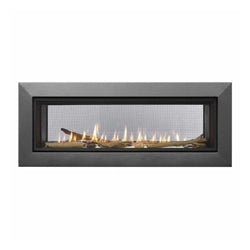
Now our direct vent fireplace? A whole other story. We installed a sleek linear model in the great room... 72 inches long, set into a floor-to-ceiling limestone wall. The heat is more subtle, but steady. I’d estimate around 35,000 BTUs, but only about 70% stays inside. The rest vents out. Still, the built-in blower circulates warm air beautifully. And the flame is mesmerizing. Tall, yellow, realistic. Our guests always think it’s wood until they lean in and realize it’s behind glass.
I've also had some experience with a B-vent. And they're… fine. Maybe 50% heat retention? I don’t have exact numbers, but it couldn’t heat the room without help from the furnace. And when the wind picked up, cold drafts came down the flue. Very romantic. Not very effective.
These efficiency differences are actually reflected in DOE appliance standards, which regulate gas appliance performance.
If you want more information on keeping your gas fireplace burning safely and beautifully for years to come, check out this ultimate guide on how to properly clean and maintain your gas fireplace.
Installation & Cost: What I Paid (and What I’d Pay Again)

Let me break this down from real invoices:
-
Ventless fireplace in the bedroom cost us around $2,400 total. That includes the unit, framing, gas hookup, and a plaster-finished surround. No chimney, no permit, one-day job. We used a licensed plumber and general contractor for safety.
-
Direct vent fireplace in the living room? That was closer to $5,800, including a full stone wall, vent run through the exterior, and a custom floating hearth. Worth. Every. Dollar. It anchors the whole house now.
-
B-vent outdoor fireplace cost us roughly $3,200, but that was part of a larger patio project. We ran the flue up through a decorative stone chimney. It looks fantastic, especially with the copper firewood box built into the side, but heat-wise… it’s more for ambiance.
If budget’s tight? Ventless will save you a bundle. If you’ve got room to invest? Direct vent is the long-term winner—especially if you’re thinking resale.
Want to know how to install an H-burner and fire glass in your fireplace? Read this step-by-step guide to upgrade your gas fireplace with style and efficiency.
Design Drama, Daily Use, and Why I’ll Never Hang Art Over a B-Vent Again
So now that we've covered efficiency and installation, let's talk about the stuff you live with every day—the look, the convenience, the daily quirks. Small electric fireplaces are perfect for creating cozy, warm spaces without the hassle of traditional heating methods, but trust me, it's one thing to light a test flame in a showroom. It's another thing entirely to use that fireplace through a full winter. Or to realize, too late, that you've hung your favorite painting above a fireplace that's belching invisible heat right at it.
Aesthetics & Design: It’s Not Just Flames—It’s Furniture
Here’s a confession: I care a little too much about how things look. I’ve torn out an entire fireplace surround just because it didn’t feel cohesive with the walnut floors. So when I say design matters, I mean it.

Ventless Fireplaces: Wildly Flexible, Surprisingly Beautiful
Our ventless unit in the bedroom was a dream to design around. Because there’s no flue or chimney, we could put it anywhere—literally. We framed it into a recessed wall niche, added a flush plaster finish, and floated a minimalist oak mantel above it. The result is clean, modern, and cozy. We use ceramic log media that glows softly when lit—super realistic at night. If I’m being picky (which I always am), the flames are a bit more subdued than I’d like. They’re steady and blue at the base with hints of yellow. Very controlled. It’s the price you pay for burning clean.
But! You can get some wild-looking ventless fireplaces now—ribbon burners, linear wall-hung models, even double-sided options for interior partitions. One neighbor installed a ventless fireplace between their bathroom and walk-in closet. It’s more aesthetic than functional, but it looks like a spa.
Looking to learn how to customize your vent-free fireplace? Read this to transform it into a stylish, efficient focal point in your space.

Direct Vent Fireplaces: Best Combo of Realism + Safety
In the living room, our direct vent is the showpiece. We chose a 72" frameless linear model—black interior, driftwood logs, reflective crushed glass. The flames dance beautifully, and the sealed glass gives it a very upscale look. And because it’s sealed, we could hang our 65-inch OLED above it using a cool-wall kit—something I’d never attempt with a B-vent or ventless model without clearance. The wall stays just warm to the touch, even after hours of use.
These sealed units tend to be where the high-end innovations are happening. I saw a model at a design show recently that had LED underlighting, changeable flame color, and full app control. I mean, do you need pink flames for Valentine’s Day? No. But it’s nice to know it’s possible.
Want to know more about gas fireplaces—clean, cost-efficient, and cozy? Read this to discover why they’re a smart upgrade for any home.

B-Vent Fireplaces: Classic Charm, But with Constraints
Ah, the B-vent. So charming in theory. Our original unit in the den had an open flame, glass doors, and a big traditional surround. The flames looked real (because they were) but the heat went straight up the chimney. And worse, I didn’t realize until it was too late that heat was also rising up and baking the art I had hung above it. A family portrait. Warped within a year. We now have that framed and hidden in a closet… lesson learned.
B-vent design is best when you’re embracing the old-school hearth aesthetic: stone, exposed chimneys, and maybe even a rustic lodge look. It’s not ideal for modern, minimal interiors. And you’ll always have to design around the fact that it needs to vent vertically. Which can be a design challenge.
Daily Use & User Experience: Which One Feels Effortless?
You want to know what it’s like to live with these? Here’s how they behave day to day, quirks and all.

Ventless Fireplaces: Instant Gratification, but Be Mindful
Push a button—instant fire. I usually run our ventless unit with a remote control from bed (yes, really). It warms the room fast. It’s quiet. No fan. No delay. But if I leave it on too long, the room starts to feel heavy. Moist. Like, should-I-crack-a-window kind of moist. The flames don’t roar, but they do glow. I’ve also noticed that if I forget to dust the ceramic logs before lighting it in early fall? It smells… like burnt lint. Keep it clean, and it’s magic.
One thing I learned the hard way: ventless fireplaces have sensors that shut off if oxygen levels dip. It’s a great safety feature, but it will shut down if your room is sealed too tight. Ours has never tripped, but a neighbor with a tightly insulated loft had theirs shut off mid-use during a dinner party. Not ideal.
This aligns with EPA guidelines on indoor air quality, which emphasize the importance of proper ventilation with gas appliances.

Direct Vent Fireplaces: Set It and Forget It
This is where direct vent fireplaces shine. Ours runs on a remote thermostat. I set it to 72°F, and it cycles itself on and off, just like a little zone furnace. It starts with a soft whoosh, the flames build gradually, and within 15 minutes the room is cozy.
And you know what’s underrated? No smell. Because it vents outside and pulls fresh air in, the indoor air stays pristine. I can run it all evening and never think twice. Maintenance is minimal—just an annual service to clean the glass and check the vent. Occasionally the blower hums a little louder than I’d like, but I turn it off when we’re entertaining and want that quiet, flickering vibe.
If you have kids or pets, it’s also the safest bet. No exposed flame. No emissions in the room. And the glass stays just hot enough to warn, not burn. Still, we don’t let the dog nap in front of it. Learned that lesson when she singed her tail hair walking by the ventless unit in the bedroom.

B-Vent Fireplaces: Charming, but Fussy
Using a B-vent gas fireplace is a bit like dating someone old-school. You’ll need to open the damper, maybe relight the pilot, and you’ll definitely have to remember to close things back up. It’s… a process.
And when the wind kicks up? Good luck. Ours used to blow out at the worst times. We eventually installed a specialized chimney cap to reduce downdrafts, but it was always more finicky than I wanted. One Thanksgiving, the pilot went out mid-dinner. My brother-in-law spent 20 minutes trying to get it relit while we all sat around with coats on.
That said, you can’t beat the look. Especially outdoors. On our patio, the B-vent fireplace adds that open-hearth energy that a sealed unit just doesn’t replicate. The crackle, the smell (faint, clean gas—but still), and the occasional marshmallow roasted over a ceramic log… it’s charming.
Environmental Impact, Outdoor Use, and How I’d Choose Again
By now, you’ve probably figured out that choosing a gas fireplace isn’t a one-size-fits-all kind of decision—especially when you’re planning on spending upwards of $2,500 for something that’s not just a heat source, but a defining design element in your home.
In this final part, I’ll get into the environmental side of things (because yes, I care about that too), some outdoor-use surprises I learned, and the honest advice I’d give a friend if they were choosing today. I’ll even share where I messed up and what I’d do differently if I were starting over.

Environmental Impact: Clean Burn vs. Clean Air
I spend a lot of time outdoors—gardening, grilling, just unwinding with a drink by the fire pit—so I genuinely care about clean air. One of the reasons I switched to gas fireplaces in the first place was to move away from wood smoke and its heavy particulate emissions. Gas is just cleaner. Period.
My observations about air quality differences between fireplace types are supported by scientific research from the National Institute of Standards and Technology. Their Indoor Air Quality and Ventilation research develops measurement methods for understanding how gas appliances affect indoor air—research that validates my decision to use CO₂ monitoring and explains why our direct vent unit maintains such clean indoor air.
But here’s what I’ve learned about how ventless, direct vent, and B-vent stack up environmentally:
Ventless: Efficient, But Indoors Takes the Hit
Let’s start with ventless. It’s wildly efficient. Because it burns so clean and vents nothing outdoors, it uses almost all the fuel energy for heat. That’s a win. But—and this is important—all those combustion byproducts? They stay inside. Mainly carbon dioxide and water vapor. It’s not hazardous if you follow the rules (right size room, proper clearance, occasional ventilation), but it can affect indoor air quality if you push the limits.
I run ours maybe 3–4 times a week during winter, for a couple of hours max. That seems to keep everything balanced. But I know folks who run theirs 8 hours a day and then wonder why the windows are fogging up or the air feels musty. It’s not the fireplace’s fault—it’s just physics.
Direct Vent: Clean Inside and Out
My vote for best environmental balance? Direct vent. Combustion is sealed. Air comes from outside, and exhaust goes right back out. No impact on your indoor air. And emissions-wise, it’s minimal—mostly just CO₂ and water vapor. It’s no worse than running your gas furnace or stove.
Plus, here’s something I hadn’t realized until chatting with a sales rep at Starfire Direct: using a direct vent fireplace for zone heating can actually reduce your overall energy use. We keep the house thermostat lower and just run the fireplace in the living room at night. Cuts our gas bill by about 15% in the winter. That’s not nothing.
B-Vent: Open Charm, But Energy Waste
Environmentally, B-vent is the least efficient. Because it draws combustion air from your room and vents straight up the chimney, a lot of warm indoor air goes with it. You’re literally heating the outside. And if you forget to close the damper after use? You’re doing it even when it’s off. (Been there, paid that heating bill.)
That said, it still burns gas cleanly. It’s not smoky or sooty like wood. But it does feel like an older technology in terms of energy use.
Indoor vs. Outdoor Use: Where Each Type Makes the Most Sense
Let me tell you—gas fireplaces outdoors are game-changers. I used to think they were just for looks. Not anymore.

Outdoor Ventless: Eh… Not My Favorite
Technically, you can use ventless gas log sets outdoors if the space is covered and has adequate airflow—like a screened porch or a covered patio. But honestly? I wouldn’t bother. Wind messes with the flame. The moisture from combustion is irrelevant outdoors, so you lose the main benefit (heat efficiency). And ventless flames are low and even, which doesn’t really hold up in an open-air setting.
This is important: buy gas logs that fit your fireplace.
We tried it once during a backyard dinner party and the breeze kept making the flame flicker out. Not great.
Outdoor Direct Vent: Perfect for Transitional Spaces
Now, direct vent fireplaces outdoors? Gorgeous. Think: glass-front linear fireplaces built into an exterior wall, viewable from both indoors and out. A friend of mine has one between his living room and a covered lanai—it’s like a modern fire window.
The glass keeps the flame protected from the wind, and since it vents through the wall or roof, everything stays tidy. You do need shelter from direct rain and wind, so it’s not a wide-open deck solution. But for semi-enclosed outdoor rooms? It’s fantastic. We almost installed one in our gazebo, but ran out of time that season. Next year…
Outdoor B-Vent: The Backyard Classic
Our outdoor fireplace is basically a B-vent structure: open flame, vented up through a decorative chimney, and made with outdoor-rated stone and a weatherproof burner kit. It’s more about ambiance than heat, but under the stars, that’s all you need. We’ve roasted marshmallows, slow-sipped bourbon, even hosted New Year’s Eve out there.
Only regret? I wish I’d extended the chimney a bit taller to reduce smoke swirl when there’s a cross-breeze. It’s not terrible, but I’ve had to move the patio heater a few feet back to avoid blowback.
Final Thoughts: If I Were Choosing Again…

So… you’re probably wondering, “Okay, but which one should I buy?”
Here’s how I’d answer, friend to friend—because I have answered this for friends over cocktails and firelight:
If you want serious heat and a clean look with minimal install fuss:
Go Ventless. It’s ideal for bedrooms, dens, or anywhere you don’t want to tear through walls. Just keep ventilation in mind. And definitely get a high-quality CO detector (ours is from Airthings—worth every penny).
If you want the best combination of heat, aesthetics, safety, and indoor air quality:
Go Direct Vent. Yes, it costs more. But for high-use areas like living rooms or great rooms, it’s hands-down the best investment. I’d install one again tomorrow without hesitation. In fact, we’re planning one for the upstairs reading loft this fall.
If you already have a chimney and just want a flickering flame on special occasions:
B-Vent is fine. It’s nostalgic. It’s simple. Just don’t expect it to heat the house or work like a modern appliance. And be vigilant with your damper and airflow.
My Final Tip? Start with Starfire Direct
I’ve said it before, but it’s worth repeating: bring in professionals when dealing with fireplaces. There's just too much that can go wrong when installing, replacing, or repairing fire appliances in your home. And Starfire Direct is among the best.
We have guides, calculators, and real human help when you need it. Which, if you’re spending north of $2,500, is non-negotiable in my book.