







The old saying “follow your nose” definitely applies when you get a whiff of a strange or unexpected gas fireplace smell. Our noses have been saving our lives and limbs for as long as… well, I’m guessing as long as people have had noses. And when your sniffer warns you that something may be off about your home’s fireplace, it’s important to understand the signs and symptoms of danger, as well as what to do in each case.
The truth is your gas fireplace is always communicating. Every smell it produces is a piece of information. So, which smells are warning signs, which are normal, and which ones are just asking for a simple fix.
But before we get into all the important gas fireplace smell details, let me start with the most important piece of advice.
When it comes to gas appliances, always have a certified professional look at your setup. Trying to DIY a gas line or a ventilation-related fix can lead to costly and potentially dangerous mistakes. The same goes for DIY fixes. And when you take matters into your own hands, you could accidentally violate local laws and ordinances. So while today’s guide is here to help you identify what’s going on, the safest solution for anything beyond simple cleaning is always to call a pro.
Fireplace Smells: Core Concepts Every Homeowner Should Know
Here’s a quick overview of the most common or dangerous signs from your fireplace. You’ll get a fuller explanation for each in the article below, though.
- That “Rotten Egg” Smell is a Brilliant Safety Feature. If you smell sulfur or “rotten eggs,” one of your fireplace’s safety systems is working perfectly. You’re smelling a scent that’s been added to your natural gas, telling you that the natural gas is leaking into your home. Gather everyone, get a safe distance away, and call 911 or your gas utility’s emergency number.
- The “Burning Dust” Smell is Just a Seasonal “Hello”. That dusty, plasticky, or “burning hair” smell you get the first time you light the fire each fall? That’s almost always just your fireplace burning off the household dust, pollen, or pet dander build-up. Worth investigating, but very rarely an emergency.
- Black Soot is Your Fireplace’s Most Helpful Visual Signal. This is a big one. Black soot (a powdery carbon) on your ceramic logs or the inside of the glass is never normal for a gas fireplace. Like a ‘check engine light’, it’s signaling that fuel isn’t burning off completely. A clear sign to call a pro.
- Remember: A Pro Isn’t a Cost, They’re an Investment. I get it. Unexpected expenses are painful. But when it comes to gas and fireplace safety, an expert is your best friend. Calling a certified technician for a persistent issue isn’t giving up; it’s a smart, safe home management move.

What’s That Smell? Decoding Your Fireplace’s Odor Signals
The best way to diagnose the problem is to trust your nose. So, let’s break everything down by the type of smell you’re noticing. Find your scent, find your answer.
Priority One: The “Rotten Egg” Emergency
Let’s tackle the most important gas fireplace smell alert first. If your living room suddenly smells like rotten eggs or sulfur, you need to act urgently. Worrying about whether or not your fireplace is broken can wait until later. Why? Because what you’re smelling is the natural gas from your fireplace escaping, and it’s actually a planned warning sign. Natural gas is actually naturally odorless, so utility companies add that specific scent (mercaptan) as an unmistakable “heads-up”. Your job is to listen (or rather, to smell) then calmly follow this safety action plan:
- Don’t Investigate. Your only job is to be the safety captain. Don’t try to find the source. Don’t touch any light switches or appliances, on or off.
- Get Out of the House. Calmly get everyone (family, guests, pets) out of the house and into the fresh air.
- Make the Call (From a Safe Distance). Once you’re a good ways away from the house, call 911 or your gas utility’s emergency number. This is a situation for emergency services and certified gas professionals only.
The “Seasonal Sizzle”: Decoding That First-Burn Smell
This may be the #1 reason for panicked service calls, and it’s almost always just your fireplace clearing its throat. It’s that sharp, “burning plastic” or “hot dust” smell that shows up on the first chilly day of autumn. And about 63.4% of gas fireplace smell problems are from this exact cause. It’s usually the smell created when your fireplace starts burning off the household dust, pollen, and pet dander that settled on the burners over your fireplace’s off-season. So let’s take a look at the most common causes.
- Cause 1: The “Seasonal Sizzle”. This is 100% normal. Over the spring and summer, your fireplace collects household dust, pet dander, and pollen. When you fire it up, you’re not smelling a problem; you’re smelling the “seasonal burn-off”.
- Cause 2: The “New Product Cure”. Another common question that shouldn’t cause you any concern. If you just installed a new gas fireplace, you’re going to smell it. And what you’re smelling is simply the heat-resistant paints and materials from the factory curing under high heat.
- The Fix: The first thing you should do is simple… open a window or two to ventilate the house. Let the fireplace run on high for 4 to 8 hours. The smell will go away.
- The Red Flag: On the other hand, if the smell is very strong, persists after a few days, or starts suddenly in the middle of the fireplace season, shut it down and call a professional.

The Scented Candle Culprit: The Vent-Free Mystery
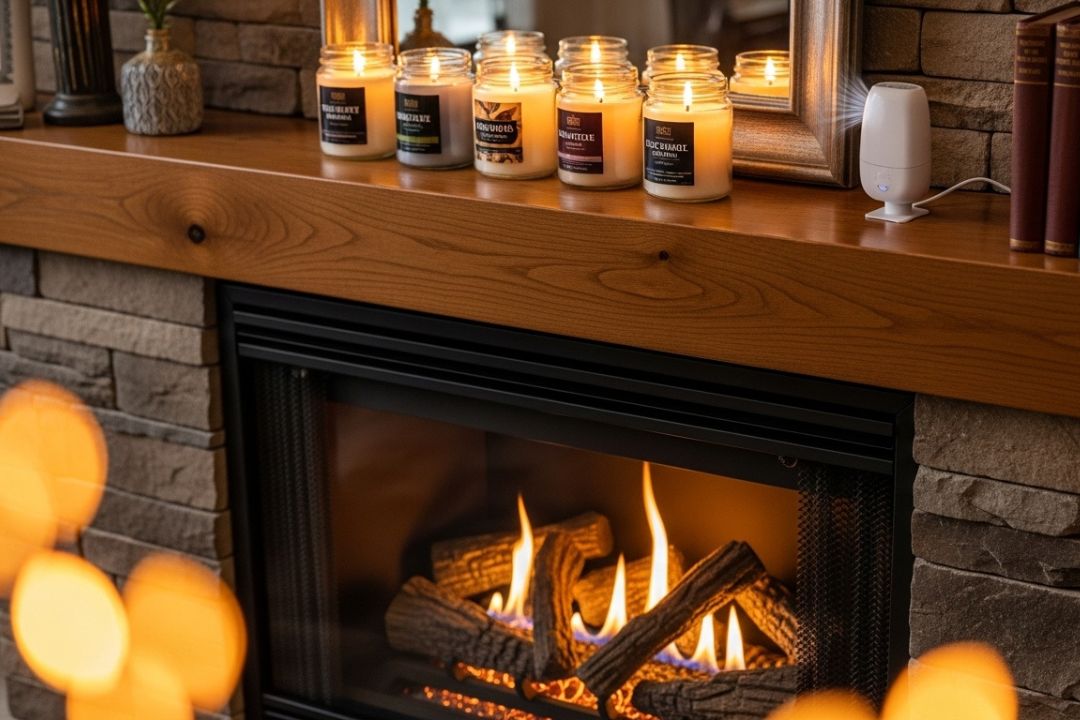
Now, this is something my team hears about from customers from time to time. A new vent-free fireplace owner frustrated that their new unit smells like weird chemicals. The thing about vent-free fireplaces is that they’re kind of “air omnivores” that burn everything in the room’s air… including things like plug-in air fresheners. Those added fragrances create a strange incomplete combustion smell.
- The Fix: Try turning off all the “smell-good” things in the room. Crack a window. Then, after about fifteen minutes, turn on the fireplace. Is the smell gone? Mystery solved.
The Unmistakable Scent of Moisture: Musty & Damp Odors
Your fireplace is a fire place, right? So it should be dry. If you’re getting a “damp”, “musty,” or “mildew” odor, that’s an unmistakable sign of water. This is most likely caused by water getting into your chimney system from a cracked chimney crown, faulty flashing, or a missing/damaged chimney cap. It can also be a “flow reversal” (downdraft) in humid summer months, which pulls damp, musty chimney air down into your house.
- The Fix: This is a clear “call a pro” situation to find and fix the leak. While you wait, you can place a small bowl of white vinegar or a pan of baking soda in the unlit firebox to absorb the odor.

The “Unwelcome Guest” Problem: Foul or Decomposing Odors
Okay, discovering this smell is never great. That “dead animal” smell. Your chimney, especially one without a cap, looks like a great, sheltered spot for birds, squirrels, or raccoons to build a nest. Sometimes (sadly) these “unwelcome guests” get trapped.
- What NOT To Do: Don’t try to “smoke 'em out.” You’d be lighting a fire directly under a (likely) dry, flammable nest… a textbook way to start a dangerous chimney fire.
- The Fix: Unless you’re Mary Poppins, this is 100% a job for a professional chimney sweep or a humane wildlife removal service. Once the flue is clear, have them install a chimney cap to make sure this never happens again.
Beyond “Just Dirty”: Why Soot is Your Fireplace’s Red Flag
Smells are your gas fireplace’s primary warning system, but the #1 visual signal is soot. And yes, handsome chimney-sweeps from our favorite childhood movies dealt with soot all the time. Gas firepaces? Not so much.
Soot is your fireplace’s most important visual warning. It is a direct signal that your fireplace is running inefficiently and potentially producing deadly CO (carbon monoxide). Gas fireplaces are designed to burn clean; any soot is a red flag and requires a call to a certified technician.
- A quick note: People often ask me, “Is this creosote?”. Nope. Creosote is a sticky, tar-like, highly flammable byproduct of burning wood. Gas fireplaces produce soot, which is a fine, black carbon powder. Both are bad, but your gas fireplace should not be making either.

Maintaining Your Gas Fireplace Care
A little bit of care goes a long way. And knowing how to properly care for your gas fireplace with regular maintenance and cleaning keeps your fires burning brightly, helps minimize unexpected professional costs, and makes your fireplace safer for your home. But remember, these tips are for simple maintenance. Anything involving the gas supply, ventilation, or persistent problems should be left to a certified professional.
SAFETY FIRST! Before you touch anything, you will:
- Turn off the gas supply valve.
- Make sure the pilot light is OFF.
- Let the entire unit cool down completely.
Seasonal Maintenance Calendar: A Simple Plan
The best way to “fix” a smelly fireplace is to stop the problem before it starts.
-
Spring Shutdown (The Summer Hibernation)
- Turn Off the Pilot Light! A standing pilot wastes gas and can lead to a sulfur-like buildup.
- Give it a Good Clean. Do your glass and log cleaning after the burning season.
- Close the Flue Damper (if you have one). This stops humid summer air and musty downdraft smells.
-
Fall Startup (The Grand Re-Opening)
- Schedule Your Pro! An annual inspection by an NFI-certified technician is essential. They’ll check gas pressure, clean vents, inspect connections, and test safety controls. This is the single best way to ensure safety and code compliance.
- Test Your Detectors. Change the batteries in your Carbon Monoxide detectors. This is non-negotiable.
- Do the “Burn-Off.” Relight the pilot and run the fireplace for an hour before your first party to burn off any new dust.

When to Call a Pro: Your “Pro vs. DIY” Checklist
I love an empowered or handy homeowner. But as an informed homeowner, you also know the value of an expert. And when it comes to in-home fire safety, you really want an expert’s perspective. And make sure the fireplace technician you choose is NFI-certified (National Fireplace Institute). That’s the gold standard.
Here is a simple chart for when to DIY and when to make that call.
| Symptom | Safe DIY Fix | When to Call a Pro (NFI-Certified) |
|---|---|---|
| Faint Gas Smell (at valve) | Perform soap-bubble test. | IMMEDIATELY if test fails or smell is strong. |
| “First ““Dusty”” Smell of Season” | Open windows, let it burn off. | If smell persists for more than a few hours. |
| Pilot Light Won’t Stay Lit | Use canned air to clean pilot assembly. | If cleaning doesn’t work. (Likely needs a new thermocouple). |
| Black Soot on Logs/Glass | None. | ALWAYS. This indicates a combustion problem. |
| Dirty/Cloudy Glass | Clean with 50/50 vinegar/water. | If glass is white/etched or cleaning doesn’t remove soot. |
| Musty / Damp Smell | Place baking soda/vinegar in firebox. | ALWAYS (to find and repair the water leak). |
| Hissing/Rumbling Noise | None. | IMMEDIATELY. Turn off gas and call. |
| Annual Maintenance | Visual inspection, test CO detectors. | ALWAYS. Book an annual service for gas pressure, vent check, and safety controls. |

Ready For a Safer Gas Fireplace?
And just like that, you’re no longer just any homeowner. You’re a confident, fireplace-savvy homeowner. You speak the language. Your nose knows the difference between a minor issue and a major signal. And that’s nothing to sneeze at! (Sorry, I couldn't resist.)
The Starfire Direct team believes a fireplace is the heart of the home, and we’re thrilled to be a part of yours. So if you still have questions about gas fireplace smells, or just want some help picking the right gas fireplace for your home, give us a call!